
From the labyrinthine medinas of Fez to the golden silence of the Sahara, Morocco Tours stands as one of the world’s most profoundly transformative travel destinations — a kingdom where antiquity and adventure converge at every turn.
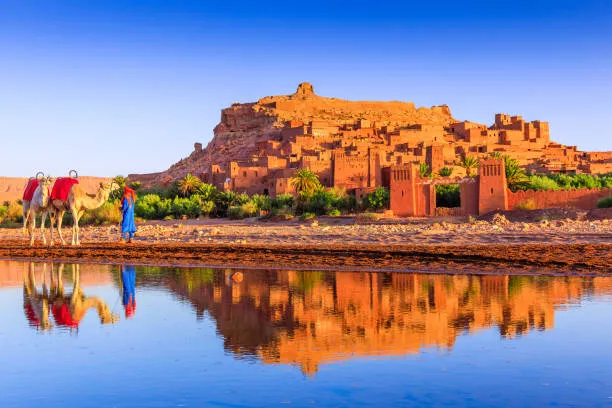
Few destinations on earth possess the power to arrest the senses quite like Morocco. A kingdom perched at the northwestern edge of Africa — where the Sahara breathes fire into the south and the Atlantic and Mediterranean cradle its coasts — Morocco is a land of extraordinary contrasts: ancient and modern, austere and opulent, familiar and profoundly foreign. For the traveler in search of something genuinely transformative, Morocco tours offer an unrivalled tapestry of experience that no single journey can exhaust.
The Medinas: Walking into Living History
No Morocco tour begins without first being swallowed whole by a medina. These ancient walled city centers — declared UNESCO World Heritage Sites in Fez, Marrakech, and Meknes — are not merely tourist attractions; they are living, breathing organisms that have functioned without interruption for centuries. The medina of Fez el-Bali, established in the 9th century, is widely regarded as the world’s largest car-free urban area. Within its narrow derbs, donkeys still carry goods past tanneries where leather has been cured by hand since the Middle Ages, while the call to prayer drifts over rooftop terraces fragrant with jasmine and cumin.
Marrakech’s Djemaa el-Fna square presents an entirely different theater. By day it is a marketplace of orange juice vendors, fortune tellers, and henna artists. By night it transforms into a vast outdoor spectacle, where gnawa musicians, snake charmers, and storytellers perform beneath a constellation of food stall lights. No photograph truly prepares a visitor for this experience. It must be lived.
“The medina does not reveal itself all at once. It grants access slowly, one alleyway at a time, to those patient enough to wander without purpose.”
The Sahara Desert: Where Silence Has a Sound
Among the most iconic Morocco tours is the journey south toward Merzouga and the towering dunes of Erg Chebbi. These are not modest hills of sand — they rise up to 150 meters in undulating, copper-gold ridges that shift with the wind and glow incandescent at sunrise and sunset. Travelers arrive by camel caravan, as traders and nomads have for millennia, settling into Berber desert camps where mint tea is poured from a theatrical height and the Milky Way blazes overhead in a sky blessedly free of light pollution.
The Saharan experience is, above all else, one of scale and silence. The desert imposes humility. It reminds the visitor that the world is ancient and immense, and that the noise of modern life is, in the grand scheme of things, remarkably temporary. Spending even a single night beneath a canvas tent in the open erg is among the most disorienting and restorative experiences available on this planet.
The Atlas Mountains: A Kingdom Above the Clouds
Between the imperial cities of the north and the desert of the south lies the Atlas Mountain range — a world unto itself. The High Atlas peaks above 4,000 meters at Jebel Toubkal, North Africa’s highest summit, drawing serious trekkers from across the globe. Valley routes through the Draa, Dadès, and Todra gorges offer dramatic scenery, with sheer canyon walls of burnt sienna pressing close on either side and the sound of river water echoing below.
Berber villages cling to cliffsides throughout the range, their kasbahs — fortified earthen dwellings of extraordinary architectural ingenuity — blending seamlessly into the ochre landscape. Staying in one of these villages, sharing bread baked in a clay oven and listening to Amazigh songs as the fire burns low, offers a dimension of Moroccan travel that no imperial city can replicate.
Imperial Cities: Where Dynasties Left Their Mark
Morocco’s four imperial cities — Fez, Marrakech, Meknès, and Rabat — each carry the weight of dynastic ambition and artistic achievement. Meknès, often overlooked in favor of its more famous neighbors, conceals an extraordinary legacy in its vast granaries and stables built by Sultan Moulay Ismail in the 17th century. The ornate Bab Mansour gate, considered one of the finest in all of North Africa, stands as a testament to that enduring ambition.
Rabat, the modern capital, offers a more measured pace and a remarkable blend of Almoravid ruins, French colonial boulevards, and the moving Mausoleum of Mohammed V. It is a city for those who prefer their history without crowds — contemplative and dignified, where the unfinished Hassan Tower has cast long shadows for eight centuries.
Moroccan Cuisine: The Table as Cultural Text
A Morocco tour is, in no small part, a culinary expedition. Moroccan cuisine ranks among the most sophisticated in the world, shaped by Amazigh, Arab, Andalusian, and sub-Saharan African influences. The slow-cooked tagine — lamb with preserved lemon and olives, chicken with honey and almonds, kefta with eggs in spiced tomato — is a lesson in patience and layered flavor. Pastilla, a flaky pie of pigeon, almonds, and cinnamon, bridges the gap between savory and sweet with breathtaking confidence.
In the souks, spice merchants preside over pyramidal towers of ras el hanout alongside amber-hued argan oil pressed from nuts harvested only in Morocco’s Souss Valley. Eating here is not a passive act; it is an initiation into a culture’s most intimate rituals.
Planning Your Morocco Tour
BEST SEASON
March–May · Sept–Nov
IDEAL DURATION
10–14 days
CURRENCY
Moroccan Dirham
LANGUAGES
Arabic · Amazigh · French
Morocco is accessible year-round, though spring and autumn offer the most temperate conditions. Reputable Morocco tour operators provide guided itineraries ranging from week-long highlights packages to month-long deep-immersion journeys encompassing desert expeditions, trekking, and cooking classes. Independent travelers will find Morocco welcoming, though a local guide in the medinas is worth every dirham — not merely for navigation, but for the stories no map can carry.
Whatever form your Morocco tour takes, one certainty remains: you will not return unchanged. This kingdom does not simply entertain its visitors. It enlarges them — in perspective, in palette, in the quiet understanding that the world is far older, stranger, and more beautiful than any single life can fully absorb.
